
Is Authorization Required to Index Research Works? Learn whether research indexing requires permission, when authorization may matter, and how Afropus supports research discoverability.
TL;DR
- Authorization is generally not required to index research works.
- Indexing differs from publishing, republishing, or hosting full-text research.
- Index records can contain bibliographic and research metadata.
- Indexing does not transfer research ownership or copyright.
- Afropus improves the discoverability of African research.
Research indexing makes academic and scholarly works easier to find through organized records that bring together information about publications, researchers, journals, and institutions.
Platforms such as Afropus support this process by helping make African research and the people behind it more discoverable.
However, a common question is whether researchers must authorize a platform before their work can be indexed. The short answer is no.
Authorization is generally not required simply to create an index record for a research work. Indexing is primarily concerned with organizing information that helps users discover and identify existing research.
However, indexing should not be confused with reproducing or republishing a research work. Different considerations can apply when a platform wants to host the full text or reproduce substantial copyrighted material. Understanding this distinction helps researchers and institutions know what indexing actually involves.
Table of Contents
What Does It Mean to Index a Research Work?
Research indexing is the process of organizing information about academic and scholarly publications so they can be discovered more easily.
An index record can bring together details such as the research title, authors, publication, date, abstract, keywords, DOI, and institutional affiliations.
This information creates a structured record that allows researchers to search for relevant studies, identify researchers working in particular fields, and discover connections between publications and institutions.
Indexing vs. Publishing a Research Work
Indexing does not mean publishing a new version of a research paper.
An indexing platform typically creates a record that describes or identifies an existing work, while the original publication remains associated with its author, journal, publisher, or other source.
The distinction is important:
- Indexing organizes information about a research work for discovery.
- Publishing makes a research work available as an official publication.
- Republishing makes an existing work available again as a publication.
- Hosting involves making the actual research content available on a platform.
Understanding these differences helps explain why indexing a research work does not automatically require the same permissions that may apply to reproducing or republishing the work.
Is Authorization Required to Index Research Works?
No, separate authorization is generally not required simply to index a research work.
An indexing platform can create a discoverable record containing relevant information about an existing publication without claiming ownership of the underlying research.
The purpose of indexing is to improve discovery. Researchers can use indexed records to find publications, identify authors and institutions, explore research areas, and follow links to original sources.
Why Indexing Does Not Require Ownership of the Research
Indexing and ownership are separate concepts. Creating a record for a research work does not, by itself, give the indexing platform ownership of that work or transfer the author’s applicable rights.
A research index can therefore improve the visibility of a publication while keeping the connection to its original author, publisher, journal, or institution. This makes indexing an important part of a broader research discovery ecosystem.
What Information Can Be Included in a Research Index?

A research index can include structured information that helps users identify, understand, and discover a publication. This information is generally referred to as research metadata.
Research Metadata
Depending on the indexing platform, a research record may include:
- Research title
- Author names
- Abstract
- Journal or publication title
- Publication date
- DOI or other identifiers
- Keywords and subject areas
- Institutional affiliations
- Links to the original publication
These details help create a structured profile for each research work without requiring the indexing platform to reproduce the entire publication.
Why Research Metadata Matters
Good metadata makes research easier to find and understand. A researcher searching for a particular topic can use titles, keywords, authors, institutions, or subject areas to identify relevant publications.
For African research in particular, well-structured metadata can improve the visibility of researchers, institutions, and publications that may otherwise be difficult to discover through broader research databases.
When Can Authorization or Permission Become Relevant?
Although basic indexing generally does not require separate authorization, permission or licensing can become relevant when a platform goes beyond creating a research record.
Reproducing the Full Research Paper
Indexing a publication is different from making the complete paper available on another platform. Reproducing or hosting the full text can involve copyright and licensing considerations, particularly when the indexing service does not hold the relevant rights.
An index can instead provide key metadata and direct users to the original source where the full research work is available.
Reproducing Figures, Tables, or Protected Content
Research papers can contain figures, tables, photographs, illustrations, and other materials that may have separate copyright protections. Reusing these materials beyond what is necessary for indexing may therefore require permission or an appropriate license.
The specific requirements depend on the ownership and licensing terms attached to the material.
Publisher and Licensing Requirements
Publishers, journals, and repositories may have policies governing how their content and metadata can be used. These requirements can vary depending on the publication and the rights associated with it.
For this reason, responsible indexing should distinguish between creating a discovery record and reproducing protected content. This allows research platforms to improve discoverability while respecting applicable rights and licensing conditions.
Does Indexing a Research Work Benefit Researchers?
Indexing can make research easier to discover by bringing publication information into searchable and structured records.
This can help researchers reach audiences beyond the journals or platforms where their work was originally published.
Some of the key benefits include:
- Greater discoverability: Indexed research can be easier for researchers and other interested users to find when searching for specific topics, authors, or publications.
- Researcher and institutional visibility: Index records can connect publications with their authors and affiliated institutions, helping build a clearer picture of their research activity.
- Collaboration opportunities: Better visibility can help researchers discover others working on related topics and identify potential opportunities for academic collaboration.
- Connections between related research: Structured metadata makes it easier to identify publications, researchers, institutions, and research areas that are connected by common topics or fields.
How Afropus Supports Research Discovery
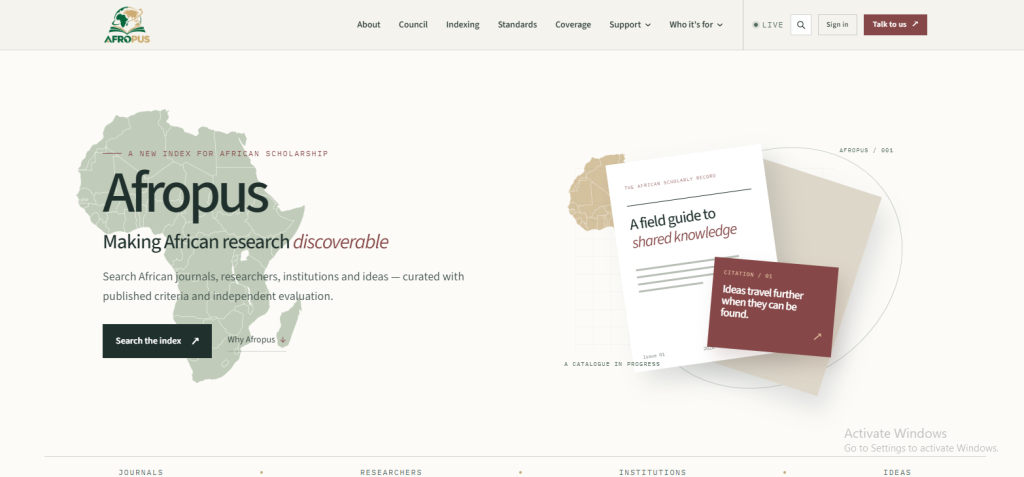
Afropus is designed to make African research more discoverable by organizing information about research works, researchers, journals, and institutions in one searchable ecosystem.
Connecting Researchers, Works, Journals, and Institutions
Research does not exist in isolation. A publication can be connected to its authors, their institutions, the journal where it appeared, and other research addressing similar topics.
By bringing these connections together, Afropus can help users move beyond individual publications and discover the wider research community around them.
Improving the Global Visibility of African Research
African researchers and institutions produce research across a wide range of disciplines, yet relevant work can sometimes be difficult to discover. Better indexing helps surface this research to users searching for knowledge, expertise, and research connections.
Afropus supports this goal by creating greater visibility for African research and the people and institutions behind it.
Supporting Discovery Without Changing Ownership
Afropus’s role in research indexing is focused on discovery and visibility. Creating an index record does not mean taking ownership of the underlying research.
Researchers, journals, publishers, and institutions can therefore benefit from greater discoverability while maintaining their applicable rights and ownership of their work.
FAQs
Do researchers need to give permission before their work is indexed?
No, separate authorization is generally not required simply to create an index record for a research work. However, permission may be relevant if the platform intends to reproduce or host copyrighted content beyond basic indexing.
Does indexing mean the indexing platform owns the research?
No. Indexing a research work does not transfer ownership or copyright to the indexing platform. The applicable rights remain with the relevant author, publisher, institution, or rights holder.
Is indexing the same as republishing a research paper?
No. Indexing creates a structured record that helps users discover a research work. Republishing involves making the research work itself available again as a publication.
Can an index link to the original research publication?
Yes. An index can provide information about a research work and link users to the original publication or source. This helps users discover the research while maintaining a connection to where it was originally published.
Why should researchers have their work indexed?
Indexing can improve the visibility and discoverability of research. It can help other researchers, institutions, and academic communities find relevant publications, identify expertise, and discover potential research connections.
Final Thoughts on Authorization for Research Indexing
Authorization is generally not required simply to index a research work. The key distinction is between creating a record that helps users discover research and reproducing or hosting copyrighted content.
Research indexing plays an important role in making academic knowledge easier to find and connect. For African researchers and institutions, greater discoverability can help bring valuable research to wider audiences and create new opportunities for academic connections.
Afropus supports this goal by helping connect African researchers, publications, journals, and institutions within a research discovery ecosystem.
Explore Afropus and make your research easier to discover, connect, and engage with.


Leave a comment