
Discover why Afropus encourages research work in indigenous languages to preserve African knowledge, improve access to scholarship, and strengthen the visibility of African research.
TL;DR
- Indigenous-language research preserves African cultural heritage and traditional knowledge.
- It makes research more accessible to local communities.
- It helps address local challenges through relevant knowledge.
- Publishing and indexing barriers limit its visibility.
- Afropus encourages greater visibility and discoverability for African scholarship.
Language plays an important role in how people understand the world, preserve their history, and share knowledge.
Across Africa, indigenous languages carry generations of cultural experiences, traditional practices, and local perspectives that deserve to be documented and studied.
However, much of the academic research available today is published in widely used international languages. While these languages support communication across borders, relying on them alone can make research less accessible to local communities and leave valuable knowledge underrepresented in scholarly literature.
At Afropus, we encourage research work in indigenous languages because African knowledge deserves to be documented, preserved, and shared with wider audiences.
We believe that supporting linguistic diversity in research can contribute to a more inclusive academic environment where African perspectives are easier to discover and appreciate.
Table of Contents
What Is Research in Indigenous Languages?
Research in indigenous languages involves producing, documenting, or communicating knowledge using the languages traditionally spoken by local or indigenous communities.
It can cover a wide range of disciplines, from history and linguistics to agriculture, healthcare, education, and environmental studies.
Examples include documenting oral histories in Yoruba, studying traditional farming practices in Hausa, recording cultural traditions in Igbo, or developing educational resources in Swahili.
This research does not have to exclude English, French, or other international languages. Researchers can publish in indigenous languages while providing translated abstracts or summaries to reach broader audiences. The goal is to ensure that language does not become an unnecessary barrier to producing, sharing, and discovering valuable knowledge.
Why We Encourage Research Work in Indigenous Languages
At Afropus, we believe African research should reflect the continent’s linguistic and cultural diversity.
Encouraging research in indigenous languages helps preserve valuable knowledge, reach wider communities, and ensure that more African perspectives contribute to academic discussions.
Preserving African Cultural Heritage and Indigenous Knowledge
African indigenous languages carry generations of history, traditions, beliefs, and practical knowledge.
Much of this knowledge has been passed down orally, making its documentation important for future generations.
Research in indigenous languages can help preserve oral histories, traditional farming methods, folklore, and local environmental knowledge. We encourage this work because preserving African knowledge is an important part of strengthening the continent’s research heritage.
Making Research More Accessible to Local Communities
Research is more useful when people can understand and apply its findings.
However, when studies are available only in languages that local communities do not understand, the people most affected by the research may struggle to benefit from it.
Research in indigenous languages can help bridge this gap by making findings more accessible to community members, educators, local organisations, and practitioners. We believe valuable research should reach beyond academic institutions and contribute to the communities it concerns.
Addressing Local Challenges Through Research
Local communities possess experiences and knowledge that can help researchers understand the challenges they face.
Conducting research in indigenous languages can make it easier for community members to share their perspectives and participate meaningfully in studies.
This approach can support research in areas such as:
- Healthcare: Understanding local health beliefs and improving health communication.
- Agriculture: Documenting traditional farming practices and local approaches to food production.
- Education: Identifying learning challenges and developing relevant educational resources.
- Environmental conservation: Recording community knowledge about local ecosystems and natural resources.
By encouraging this research, we support the development of knowledge that responds to real needs and reflects local experiences.
Strengthening Indigenous Languages in Education and Academia
Indigenous languages should have a place in academic discussions, not only in everyday communication. Research and scholarly publications can help expand their use in education and specialised fields.
Producing academic materials in local languages also creates opportunities to develop technical terminology, textbooks, glossaries, and other learning resources.
Over time, these efforts can make it easier for students and researchers to explore complex subjects in languages they understand.
We encourage this development because stronger academic resources in indigenous languages can support learning while preserving linguistic heritage.
Promoting Linguistic Diversity in Global Research
Academic research benefits from different perspectives, experiences, and ways of understanding the world.
When scholarly communication relies heavily on a small number of dominant languages, some valuable perspectives may receive less attention.
Research in indigenous languages can introduce concepts, experiences, and insights that might otherwise be overlooked. It can also encourage researchers to examine questions from perspectives grounded in local histories and cultural contexts.
At Afropus, we believe African scholarship deserves opportunities to contribute to wider academic conversations. Supporting linguistic diversity is one way to help make research more inclusive.
Giving Local Researchers and Communities a Stronger Voice
Researchers and community members should be able to contribute knowledge without language becoming an unnecessary barrier.
Indigenous-language research can help people express their experiences, explain local practices, and document perspectives that may be missing from existing literature.
It also creates opportunities for researchers to collaborate more closely with the communities they study. Such collaboration should involve informed consent, respect for cultural practices, and appropriate recognition of contributors.
We encourage research that recognises local expertise and treats community knowledge as a valuable contribution to scholarship.
Supporting Better Policy and Community Development
Research can inform decisions about education, healthcare, agriculture, infrastructure, and environmental protection.
However, its findings are less useful when the people responsible for applying them cannot easily understand the evidence.
Communicating research in indigenous languages can help make relevant findings accessible to community leaders, local organisations, educators, and policymakers. It can also support better discussions about local needs and possible solutions.
For us, encouraging indigenous-language research is part of promoting scholarship that has practical value. By supporting the documentation and accessibility of African knowledge, we can help create more opportunities for research to inform decisions and contribute to community development.
What Challenges Limit Research in Indigenous Languages?

Despite its importance, research in indigenous languages faces barriers that make it harder to produce, publish, and share.
Addressing these challenges is essential to ensuring that valuable African knowledge reaches wider audiences.
Limited Funding and Publishing Opportunities
Many researchers face limited funding and few publication opportunities for work written in indigenous languages. Academic institutions and publishers may prioritise dominant international languages, making it harder for researchers to secure support and recognition for their work.
Limited Indexing and Online Discoverability
Research can have limited reach when it is difficult to find online. Some indigenous-language publications lack searchable metadata, accessible digital records, or representation in research indexes. These gaps make it harder for readers to discover relevant studies, even when the research is valuable. These challenges also contribute to the broader issue of African research visibility, making it harder for valuable African scholarship to reach wider audiences.
Gaps in Technical Terminology and Research Resources
Some indigenous languages have limited academic resources for specialised subjects. Researchers may struggle to find standardised technical terms, reference materials, and established conventions for communicating complex ideas. Developing these resources requires collaboration among researchers, linguists, educators, and subject experts.
Translation and Research Ethics
Translating research between indigenous and international languages requires care to preserve meaning and context. Researchers must also respect cultural sensitivities, obtain informed consent, and handle traditional knowledge responsibly, particularly when communities have specific expectations about how their knowledge is shared.
How Can We Encourage More Research in Indigenous Languages?
At Afropus, we believe encouraging indigenous-language research requires practical support from academic institutions, publishers, research platforms, and local communities.
Provide More Support for Indigenous-Language Researchers
Universities, funders, and research institutions can provide grants, mentorship, and publication opportunities for researchers working in indigenous languages. Recognising the value of this work in academic assessments can also encourage more researchers to pursue it.
Promote Multilingual Academic Publishing
Publishers can support indigenous-language research by accepting submissions in more languages and offering translated abstracts or summaries. This approach helps researchers communicate with local audiences while making their findings accessible to a wider academic community.
Improve Research Indexing and Digital Visibility
Accurate metadata, searchable keywords, and accessible digital records can make indigenous-language publications easier to discover.
Exploring African research journal indexes can also help researchers understand how scholarly publications are organised and discovered. At Afropus, we support the visibility and discoverability of African scholarship by helping users find African journals, publishers, and scholarly works.
Involve Indigenous Communities in Research
Researchers should involve community members in developing research questions, sharing knowledge, and interpreting findings. Returning research results to communities in languages they understand also helps ensure that the work remains relevant and accessible to the people it concerns.
Integrate Indigenous Languages into Education
Schools and universities can encourage research in indigenous languages by developing learning materials, supporting academic projects, and creating opportunities for scholarly discussion in local languages. Collaboration between educators, linguists, and researchers can help expand the resources available for this work.
How Afropus Supports the Visibility of African Scholarship
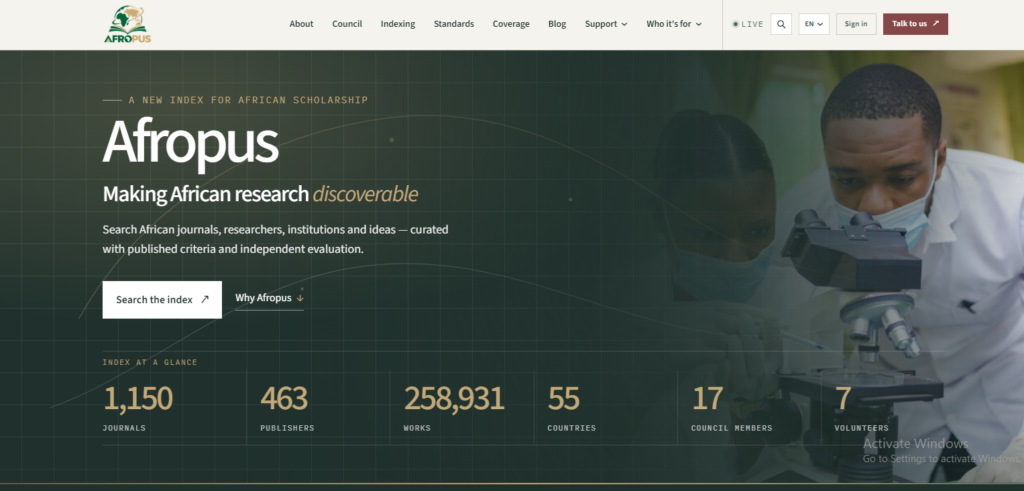
African scholarship deserves to be discovered, shared, and recognised.
However, valuable research can struggle to reach its intended audience when journals and scholarly works are difficult to find online.
Afropus helps improve the discoverability of African research through its indexing platform, where users can explore journals, publishers, and scholarly works. This supports researchers, students, and other readers looking for relevant academic resources.
Afropus supports research visibility by helping users:
- Discover African journals and publishers across different research fields.
- Find relevant scholarly works for academic study and further research.
- Access information about African scholarship more easily.
- Explore diverse research contributions, including work reflecting African perspectives and knowledge systems.
We believe indigenous-language research is an important part of this broader effort. Supporting linguistic diversity alongside the discoverability of African scholarship can help bring more African knowledge into academic conversations and ensure that valuable research reaches wider audiences.
FAQs
What Is Research in Indigenous Languages?
Research in indigenous languages involves producing, documenting, or communicating knowledge in languages traditionally spoken by local communities. It can cover subjects such as history, healthcare, agriculture, education, and cultural heritage.
Why Is Research in Indigenous Languages Important?
It helps preserve cultural heritage, makes research more accessible to local communities, and allows researchers to document knowledge and perspectives that may otherwise be overlooked.
Can Research in Indigenous Languages Be Recognised Internationally?
Yes. Research in indigenous languages can contribute to international scholarship when it meets appropriate standards of research quality and is accessible to relevant audiences. Translated abstracts, multilingual metadata, and digital indexing can also help international readers discover this work.
What Challenges Do Researchers Face When Publishing in Indigenous Languages?
Common challenges include limited funding, fewer publishing opportunities, gaps in academic terminology, translation difficulties, and limited online discoverability.
How Can Indigenous-Language Research Become Easier to Find Online?
Researchers and publishers can improve discoverability by providing searchable titles, abstracts, keywords, accurate metadata, and accessible digital records. Appropriate research indexes and repositories can also help readers locate relevant publications.
Final Thoughts on Why We Encourage Research Work in Indigenous Languages
Indigenous languages are an important part of Africa’s knowledge heritage.
Encouraging research in these languages helps preserve cultural traditions, document local expertise, and make scholarly findings more accessible to the communities they concern.
At Afropus, we believe African scholarship should reflect the continent’s linguistic diversity and have opportunities to reach wider audiences. Supporting indigenous-language research, alongside improved indexing and discoverability, is one way to help achieve this.
Ready to discover more African scholarship?
Explore Afropus to find African journals, publishers, and research works, and join the effort to make African research more visible and discoverable.



Leave a comment