
Discover how a journal article index helps African scholars find relevant research and explore academic publications. Learn how Afropus supports the discovery of African scholarship.
TL;DR
- A journal article index helps researchers discover academic publications and find relevant sources for their studies.
- Indexing makes it easier to explore scholarly works across journals, publishers, institutions, and research fields.
- African scholars benefit from resources that improve the discoverability of research produced across the continent.
- Afropus focuses on connecting readers with African journals and scholarly works, supporting wider access to African academic contributions.
- Researchers can use Afropus as a starting point for finding relevant literature and exploring African scholarship for their academic projects.
Good research starts with understanding what has already been written about your topic.
Journal articles help you learn from other researchers, spot gaps in existing studies, and find new directions for your own work. A journal article index makes it easier to find relevant publications without spending hours searching across different websites.
For African scholars, finding relevant research can sometimes take more effort than it should. According to UNESCO’s 2021 Science Report, sub-Saharan Africa accounted for just 0.7% of the world’s researchers in 2018, despite being home to 14% of the global population. Making African research easier to discover is an important step towards helping more of this work reach researchers who can learn from it and build on its findings.
Afropus helps make that discovery process easier by providing a platform for exploring African journals and scholarly works. In this guide, we’ll look at what a journal article index does, why it matters to African scholars, and how Afropus can help you find research relevant to your next project.
Table of Contents
What Is a Journal Article Index?
A journal article index is a resource that helps researchers find academic articles and related publication information.
Depending on the platform, it may organise records by journal title, author, subject, publisher, or other publication details.
Rather than searching for articles individually across numerous websites, researchers can use an index to discover relevant literature in one place. This can make it easier to explore a research topic, identify related studies, and build a foundation for further academic investigation.
How Journal Article Indexing Works
Journal indexing involves organising information about academic publications so readers can find them more easily. The specific process varies depending on the platform and its inclusion criteria.
A journal article index may help researchers:
- Discover relevant publications: Find articles related to a research question or academic interest.
- Explore journals and publishers: Identify publications and the organisations responsible for publishing them.
- Identify useful sources: Find studies that may support a literature review or provide context for new research.
- Navigate academic literature: Explore related research across different topics, institutions, and countries.
Indexing does not automatically guarantee that every listed article or journal meets a particular quality standard. Researchers should still assess the credibility, relevance, and methodology of the sources they use.
Researchers can also explore gaps in the discoverability of African scholarship to understand why indexing coverage matters when searching for African research.
Why Journal Indexing Matters to African Scholars
Finding relevant research is essential for producing credible academic work.
A journal article index helps researchers navigate scholarly publications, discover existing studies, and explore research beyond their immediate academic communities.
For African scholars, effective research discovery also creates opportunities to engage with knowledge produced across the continent and bring more African perspectives into academic discussions.
Finding Relevant Literature for Academic Research
Whether preparing a thesis, developing a research proposal, or writing a journal paper, scholars need access to relevant studies that inform their work.
A journal article index can help researchers:
- Identify publications related to their research questions.
- Explore existing studies before beginning new research.
- Find additional sources to support literature reviews.
- Discover research that may inform future investigations.
Having a useful starting point for finding scholarly publications can make the research process more organised and focused.
Discovering Research Beyond Local Academic Networks
Researchers can miss valuable studies when they rely only on publications shared by colleagues, recommended by supervisors, or available through their institutions.
A journal article index can help broaden that search by making it easier to explore research from different universities, publishers, and countries. For African scholars, this creates opportunities to discover work from other African research communities and identify connections between studies addressing similar challenges.
Exploring a wider range of publications can also help researchers recognise new perspectives and potential areas for collaboration.
Increasing the Discoverability of African Scholarship
African researchers contribute knowledge across numerous fields, yet relevant publications can be difficult to find when readers are unfamiliar with the journals, publishers, or institutions behind them.
Improving discoverability helps researchers locate these contributions and engage with them in their own academic work. It also supports the wider circulation of African ideas, findings, and perspectives.
For further context, explore the barriers limiting the visibility of African research and why they matter to the wider academic community.
This is where platforms dedicated to African scholarship have an important role to play. By bringing relevant publications into a more accessible research discovery environment, they can help connect African knowledge with a broader audience.
Afropus and the Discoverability of African Scholarship
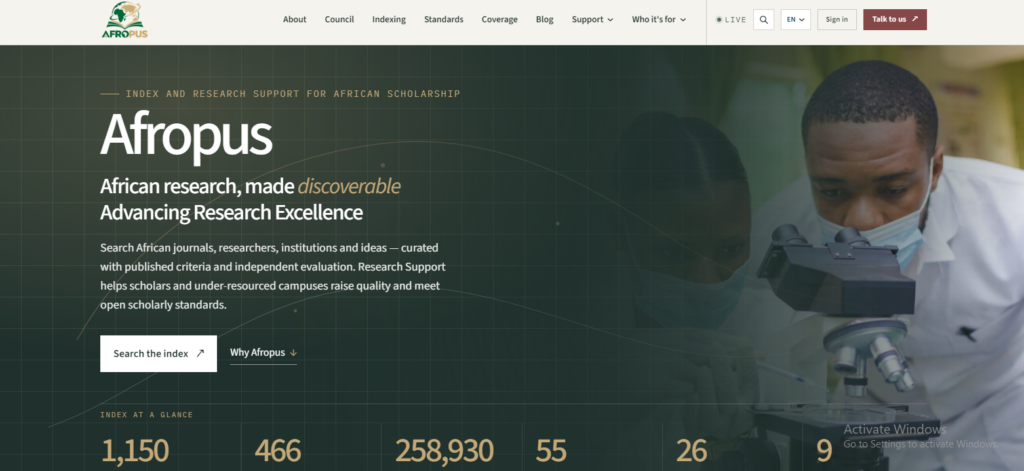
Afropus provides a dedicated platform for exploring African journals and scholarly works.
Its focus addresses an important research need: making publications from African academic communities easier to discover.
For scholars looking for African research, Afropus offers a starting point for exploring journals, publishers, and scholarly publications across the continent.
You can also learn more about African research journal indexes and their role in helping readers discover scholarly publications.
A Platform Focused on African Scholarly Research
African scholarship deserves to be discoverable by researchers both within and beyond the continent.
Afropus supports this goal by focusing on African academic publications and helping users explore the research represented in its collection.
This focus is valuable for scholars conducting literature reviews, investigating African research topics, or seeking perspectives from academic communities across different countries.
Rather than treating African research as a narrow subject area, Afropus places its discoverability at the centre of its purpose.
A Broad Collection of Journals and Scholarly Works
Afropus provides access to a growing collection of academic publications. Its reported platform statistics include:
- 1,150 journals
- 463 publishers
- 258,931 scholarly works
- 55 countries
These figures illustrate the breadth of the platform’s collection and its relevance to researchers exploring African scholarship.
For students, academics, and other research users, this collection offers a starting point for discovering publications relevant to their interests. Researchers should still review individual publication details and assess each source before relying on it in their work.
Connecting Researchers with African Publications
Discovering relevant research often requires looking beyond familiar journals and established academic networks. Afropus helps bring African journals and scholarly works into one research discovery environment, giving users another way to explore publications relevant to their academic interests.
This can be particularly useful when researchers want to investigate African perspectives on a topic, identify related studies, or explore work published across different research communities.
By making African scholarly publications easier to explore, Afropus supports a broader goal: helping more readers find and engage with the research emerging from Africa.
How to Use Afropus in Your Research Process
Afropus can serve as a starting point for discovering African journals and scholarly works relevant to your academic interests.
Using a clear research question and reviewing publication details can help you make better use of the platform.
Exploring Journals and Scholarly Works
Start by exploring the journals and scholarly publications available on Afropus. Look for material related to your discipline, research topic, or area of interest.
As you explore, pay attention to publication titles and other available details to identify works worth investigating further.
Identifying Sources for a Literature Review
A literature review requires researchers to understand what has already been published on a topic. Afropus can help you discover potentially relevant African scholarly works to consider during this process.
To build a useful collection of sources:
- Identify publications that relate directly to your research question.
- Record relevant article titles and publication details.
- Review the original studies to assess their relevance.
- Follow up on references and related research where available.
Use Afropus as one starting point for your search, alongside other appropriate academic resources.
Exploring Research Across African Countries
Research from different African countries can provide valuable perspectives on shared challenges, regional developments, and locally specific issues.
Afropus offers an opportunity to explore African journals and scholarly works beyond a researcher’s immediate academic network. This can help you identify studies from different research communities and consider perspectives that may otherwise be overlooked.
Evaluating Publications Before Citing Them
Finding a publication is only the first step. Before citing a source, review the original article and assess whether it is suitable for your research.
Consider the following:
- Relevance: Does the publication address your research question?
- Methodology: Are the research methods appropriate and clearly explained?
- Credibility: Is the journal’s editorial process and publication history credible?
- Accuracy: Can you verify the publication details and access the original work?
- Institutional requirements: Does the source meet the standards required by your university or research organisation?
Being listed on an index does not automatically guarantee that a publication meets every academic quality or accreditation requirement.
What Makes a Journal Article Index Useful?

A useful journal article index should help researchers discover relevant publications and assess the information available about them.
Understanding these qualities can help African scholars decide how to incorporate a platform such as Afropus into their research process.
Relevant and Useful Publication Coverage
An index is more useful when its collection aligns with a researcher’s subject area and information needs. Coverage of relevant journals and scholarly works gives researchers more opportunities to discover literature connected to their studies.
For scholars investigating African topics, access to publications from African academic communities can be particularly valuable.
Clear and Accurate Publication Information
Reliable publication information helps researchers identify sources and reference them correctly. Useful details may include article titles, author names, journal titles, publishers, publication dates, and identifiers where available.
Researchers should verify these details against the original publication before citing a source.
Effective Search and Discovery Features
Search and browsing features help users navigate academic literature without unnecessary effort. Clear navigation and useful ways to explore available publications can make it easier to identify relevant research.
When using Afropus, familiarise yourself with the search and browsing options currently available on the platform to make your exploration more focused.
Transparent Inclusion and Indexing Criteria
Researchers should understand what inclusion in an index means. Different platforms may have different selection policies, coverage limitations, and evaluation processes.
Before relying on an index as evidence of a journal’s standing, check its published inclusion criteria and verify any accreditation or recognition requirements separately.
Getting More Value from Afropus as an African Scholar
Beyond finding individual publications, researchers can develop a more organised approach to using Afropus as part of their wider academic work.
Start with a Clear Research Question
Define what you want to investigate before searching for publications. A focused question helps you identify relevant literature and avoid collecting sources that have little connection to your research objectives.
Explore Related Publications
Do not stop at the first relevant article you find. Explore other publications related to your topic and follow references where available. This can help you identify additional perspectives and develop a stronger understanding of existing research.
Verify Sources and Keep Research Organised
Maintain a record of useful publications, their bibliographic details, and the reasons they are relevant to your study.
An organised reference list or research spreadsheet can help you track sources, compare findings, and prepare citations when writing your paper.
Combine Discovery with Further Academic Research
Use Afropus as a starting point rather than the only source of literature for your project. Depending on your research question, consult original journal articles, institutional repositories, books, and other relevant academic resources.
Combining discovery tools with careful source evaluation helps you develop a more comprehensive understanding of your topic and build your research on relevant evidence.
FAQs
What Is a Journal Article Index?
A journal article index is a resource that helps researchers discover academic articles and related publication information. It makes it easier to find relevant literature for research projects, assignments, and scholarly publications.
Is a Journal Paper Index Different from a Journal Article Index?
The terms generally refer to similar research discovery resources. However, individual platforms may differ in their publication coverage, search features, and inclusion criteria. Researchers should evaluate each platform based on their academic needs.
How Can African Scholars Benefit from Afropus?
Afropus helps researchers explore African journals and scholarly works through a platform focused on the discoverability of African scholarship. It can serve as a starting point for finding publications relevant to research topics and academic interests.
Can I Use Afropus to Find Sources for a Literature Review?
Yes. You can use Afropus to discover potentially relevant journals and scholarly works for your literature review. Review the original publications, verify their details, and assess their relevance and credibility before citing them.
Does Being Listed in a Journal Article Index Mean a Journal Is Accredited?
No. Being listed in an index does not automatically mean a journal is accredited or meets a particular institution’s quality requirements. Researchers should verify the journal’s credentials and check the specific requirements of their university or research organisation.
Final Thoughts on Journal Article Index
Finding relevant academic literature is an important part of producing meaningful research.
For African scholars, discovering publications from across the continent can provide valuable perspectives, strengthen literature reviews, and support wider engagement with African scholarship.
Afropus offers a dedicated starting point for exploring African journals and scholarly works. By incorporating it into your research process and evaluating sources carefully, you can discover publications that inform your work and help you explore new academic perspectives.
Ready to discover African scholarship for your next research project?
Explore Afropus to find journals and scholarly works that can support your academic journey.


Leave a comment